

For First-Time Buyers, GTA Relocators, Newcomers and Investors | buyhouseinniagara.com
Buying a home in the Niagara Region in 2026 is one of the best real estate decisions a buyer can make in Ontario — but only if you go in prepared. The Niagara Region offers something increasingly rare in the province: genuine affordability relative to the GTA, strong rental demand, growing infrastructure investment and a quality of life that is pulling thousands of buyers away from Toronto every year. At the same time, the 2026 market has its own dynamics — interest rate movements, inventory changes and neighbourhood-specific price trends — that make local knowledge non-negotiable.
This guide is for anyone seriously considering buying a home in Niagara in 2026. Whether you are a first-time buyer navigating mortgages and government programs for the first time, a GTA family relocating for affordability and space, a newcomer to Canada building your first Canadian asset, or an investor evaluating rental yield and capital appreciation — this is your complete reference for the Niagara buying process from pre-qualification through to closing.
For a broad overview of where the market stands right now, start with the Niagara Real Estate Market Forecast 2026 on Arzman.ca — then come back here for the step-by-step buying process.
Why Are Buyers Choosing Niagara in 2026?
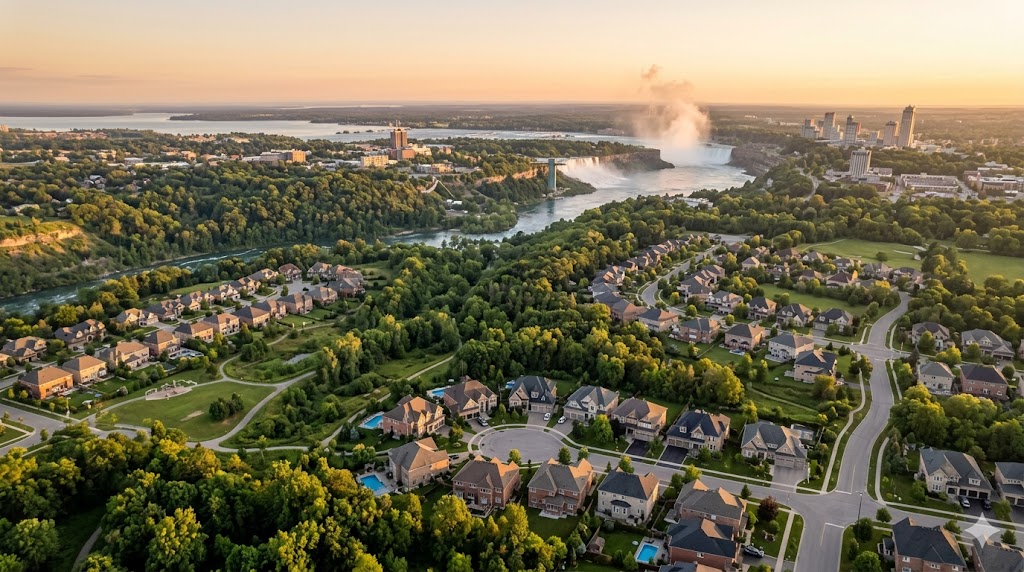
Colborne, Pelham and Lincoln — has evolved from a secondary Ontario market into one of the most actively targeted regions for GTA buyers and relocators. Several converging factors make 2026 a particularly compelling time to buy here:
- Average home prices in Niagara remain 40–60% below comparable properties in the GTA, stretching purchasing power significantly for families and first-time buyers
- The Niagara GO train corridor expansion and QEW commuter access are narrowing the practical distance between Niagara and Toronto for remote and hybrid workers
- Population growth driven by Brock University, Niagara College and the region’s agri-tourism and healthcare sectors supports long-term rental demand for investors
- Bank of Canada rate movements in 2025–2026 have improved mortgage affordability compared to the peak rate environment of 2023–2024
- Pre-construction activity is active across the region, with multiple new communities offering lower entry points than resale for early buyers
Buyers comparing Niagara with other Ontario secondary markets consistently rate the combination of waterfront access, wine country lifestyle, major hospital and university infrastructure, and proximity to the US border as unique lifestyle and investment advantages. Read our Niagara Falls Neighbourhood Guide 2026 for a city-by-city breakdown.
Step-by-Step: How to Buy a Home in Niagara in 2026

Step 1 — Assess Your Financial Position
Before you search a single listing, you need a clear picture of your financial position. This means calculating your available down payment, estimating your maximum mortgage qualification based on current stress test rules, and understanding all the costs beyond the purchase price that buyers frequently underestimate.
The Canadian mortgage stress test requires buyers to qualify at the greater of their contract rate plus 2 percent or 5.25 percent — meaning your actual mortgage rate and your qualifying rate are different numbers. A licensed mortgage professional can calculate your exact qualification ceiling based on your income, debts and down payment before you start shopping.
Complete Cost Breakdown for Buying a Home in Niagara 2026
| Cost Item | Who Pays | Estimated Amount | Notes |
|---|---|---|---|
| Down payment | Buyer | 5% minimum (under $500K); 10% on $500K–$999K; 20% on $1M+ | 20%+ avoids CMHC mortgage insurance premium |
| CMHC mortgage insurance | Buyer (added to mortgage) | 2.8%–4.0% of mortgage amount | Required if down payment under 20%; based on LTV ratio |
| Ontario Land Transfer Tax | Buyer | 0.5%–2.5% of purchase price (tiered) | First-time buyers receive up to $4,000 rebate |
| Legal fees (lawyer) | Buyer | $1,500–$2,500 | Includes title search, closing documents |
| Home inspection | Buyer | $400–$600 | Strongly recommended; not legally required |
| Title insurance | Buyer | $200–$400 | Protects against title defects |
| Appraisal | Buyer | $300–$500 | Required by some lenders |
| Property tax adjustment | Buyer | Varies | Reimburse seller for prepaid taxes |
| Moving costs | Buyer | $1,000–$5,000+ | Depends on distance & season |
| Home insurance | Buyer | $1,200–$2,400/year | Required before closing |
| Utility setup | Buyer | $200–$500 | Hydro, gas, water connections |
RULE OF THUMB: Budget 1.5%–3% of your purchase price in closing costs beyond your down payment. On a $650,000 Niagara home, that is $9,750–$19,500 in closing costs on top of your down payment. Buyers who plan only for the down payment are routinely caught short at closing.
Step 2 — Get Pre-Approved for a Mortgage
A mortgage pre-approval is not the same as pre-qualification. Pre-qualification is an estimate; pre-approval is a conditional commitment from a lender based on verified income, credit and employment documentation. In the Niagara market — particularly in competitive price ranges between $550,000 and $800,000 where multiple offer situations occur — sellers and their agents take pre-approved buyers significantly more seriously than pre-qualified or unverified buyers. Compare mortgage rates from multiple lenders before committing. Use Ratehub.ca to compare current Ontario mortgage rates across banks, credit unions and mortgage brokers — a 0.25% rate difference on a $600,000 mortgage saves over $18,000 in interest over a 5-year term.
Step 3 — Choose Your Niagara City or Community
The Niagara Region spans 12 municipalities with meaningfully different price points, demographics, commute profiles and lifestyle characteristics. Choosing the right community for your needs before you start viewing properties prevents the common mistake of falling in love with a property in the wrong location for your actual life.
| City / Area | Avg. Price (2025–2026) | Best For | Key Feature |
|---|---|---|---|
| St. Catharines | $580K – $780K | Families, professionals, first-time buyers | Largest city; full amenities; Brock University proximity |
| Niagara Falls | $540K – $750K | Investors, tourism workers, families | Strong rental demand; tourism infrastructure; US border |
| Welland | $460K – $620K | Budget-conscious buyers, young families | Most affordable city; canal-side living; growing community |
| Thorold | $500K – $680K | Students, young professionals, investors | Brock University adjacent; rapidly growing; strong rental |
| Fort Erie | $450K – $640K | Waterfront buyers, retirees, US commuters | Crystal Beach waterfront; quiet lifestyle; US border access |
| Port Colborne | $440K – $620K | Retirees, lakefront buyers, remote workers | Affordable waterfront; Lake Erie access; quieter pace |
| Pelham / Fonthill | $680K – $950K | Upsizing families, luxury buyers | Premium community; vineyards; top-rated schools |
| Niagara-on-the-Lake | $900K – $1.5M+ | Luxury buyers, wine country investors | Heritage properties; wine route; premium lifestyle |
For detailed neighbourhood profiles within Niagara Falls, read the Niagara Falls Neighbourhood Guide 2026. For Welland and St. Catharines comparisons, explore properties across the Niagara Region on BuyHouseInNiagara.
Step 4 — Work With a Local Niagara Realtor
The Niagara market has distinct characteristics that a GTA or national realtor without local knowledge will miss — flood plain considerations near waterfront properties, heritage designation restrictions in older neighbourhoods, the specific dynamics of pre-construction communities in Thorold and Pelham, and the rental market nuances that matter for investor buyers. A local realtor who closes transactions in Niagara every week has market intelligence that no portal or algorithm provides.
Quantum Team Realty is an experienced real estate brokerage serving the Niagara Region. Book a free buyer consultation with Quantum Team Realty — they will review your budget, identify the communities and property types that match your goals, and guide you through every step of the Niagara buying process.
Step 5 — Search, View and Make an Offer
Once pre-approved and paired with your realtor, the active search phase begins. In 2026, the Niagara market at entry-level price points ($450,000–$650,000) continues to see competitive situations, while the $700,000–$900,000 range has more negotiating room and longer days on market. Your realtor will advise on offer strategy based on the specific property, its price history and comparable recent sales.
- Always include a home inspection condition unless your realtor specifically advises otherwise based on current competition — waiving inspections on a property with deferred maintenance is a costly risk
- The financing condition gives you time to finalize mortgage approval after the offer is accepted — typically 5 business days; do not waive this without confirmed lender commitment
- Status certificates are required for condo purchases — review with your lawyer before removing conditions; they reveal the financial health and any legal issues with the condo corporation
Step 6 — Complete Due Diligence and Close
Once your offer is accepted and conditions are fulfilled, your lawyer takes over to manage the closing process — title search, title insurance, mortgage registration, closing adjustments and key transfer. The closing period in Ontario is typically 30–90 days from accepted offer, though longer or shorter closings can be negotiated based on both parties’ needs.
Your lawyer will prepare a statement of adjustments — the final financial summary of the transaction including all closing costs, property tax adjustments and your final amount due on closing day. Review this carefully with your lawyer before your closing date.
Government Programs for Niagara Home Buyers in 2026
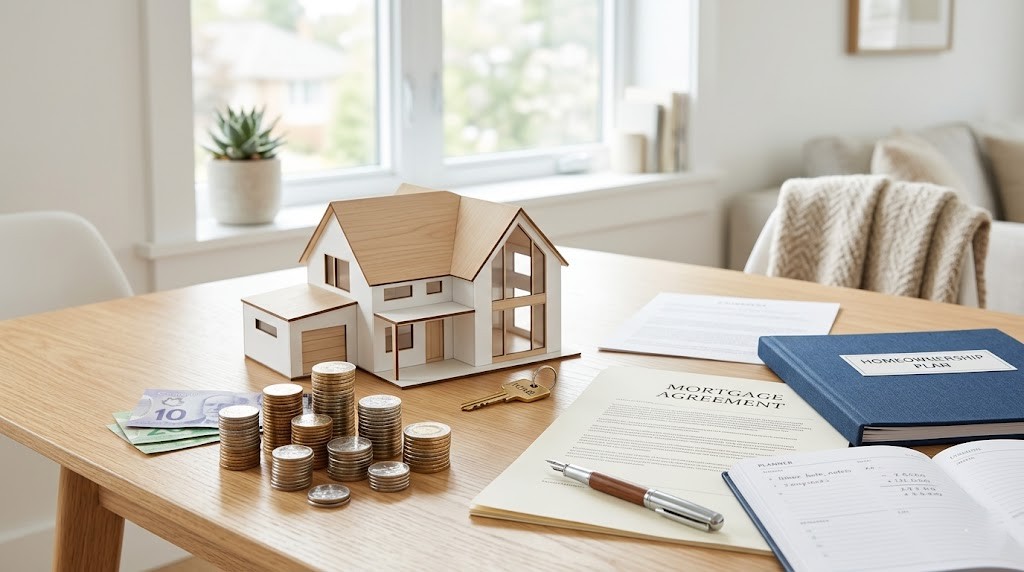
First-time buyers in Ontario have access to several programs that meaningfully reduce the cost of entering the market. Ensure you understand eligibility requirements before closing — several of these must be claimed at time of purchase and cannot be applied retroactively:
- Ontario Land Transfer Tax First-Time Buyer Rebate — up to $4,000 rebate on Ontario LTT for first-time buyers purchasing a principal residence; applies to homes up to $368,000 at full rebate (partial above that threshold)
- First Home Savings Account (FHSA) — tax-free savings account allowing first-time buyers to contribute up to $8,000/year ($40,000 lifetime) toward a first home purchase; contributions are tax-deductible
- RRSP Home Buyers’ Plan — withdraw up to $35,000 from your RRSP tax-free for a first home purchase; must be repaid over 15 years
- GST/HST New Housing Rebate — if buying a newly built home or substantially renovated property, partial GST/HST rebate may apply; administered through CRA
- CMHC Mortgage Insurance — required if your down payment is under 20%; allows qualified buyers to enter the market with as little as 5% down on homes under $1.5M (2024 threshold increase)
For the complete first-time buyer program breakdown with current eligibility criteria, visit the Canada.ca First-Time Home Buyer page and review Ontario Land Transfer Tax rates and rebate details on ontario.ca.
Should You Rent or Buy in Niagara in 2026?
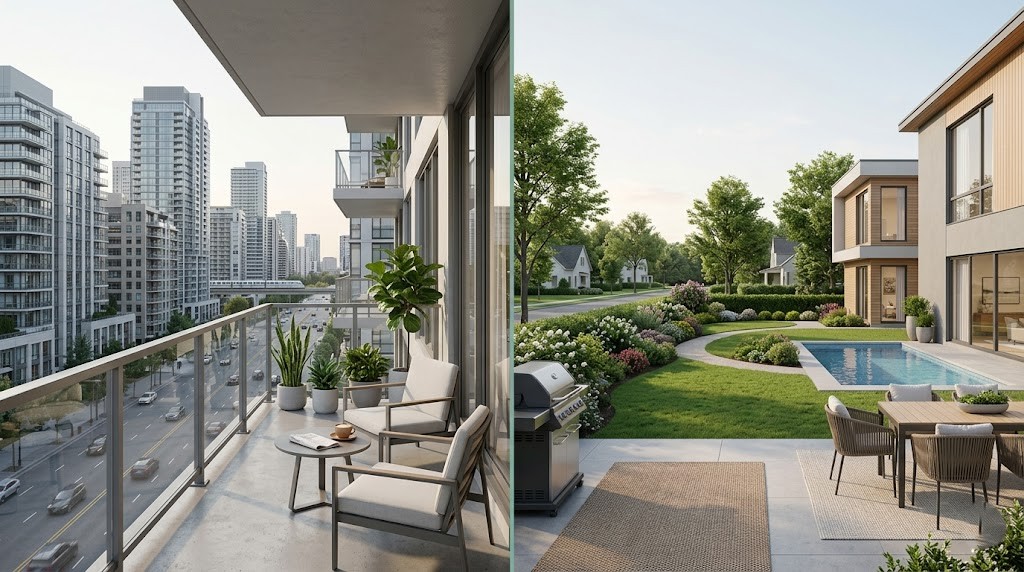
Not every Niagara buyer is in the right position to purchase in 2026. If you are new to the region, recently arrived in Canada, or unsure about which city or neighbourhood fits your life, renting for 6–12 months before buying gives you valuable market knowledge and removes the risk of buying in the wrong location.
The Niagara rental market in 2026 offers good quality housing across all price ranges — from student-friendly apartments in Thorold and St. Catharines to family homes in Welland and Fort Erie. Renting first is not a financial failure; it is a strategic pause that often leads to a better buying decision. Explore Niagara rental options at HouseForRentInNiagara.com for current listings and rental market guides.
Pre-Construction vs Resale: Which Is Right for Niagara Buyers in 2026?
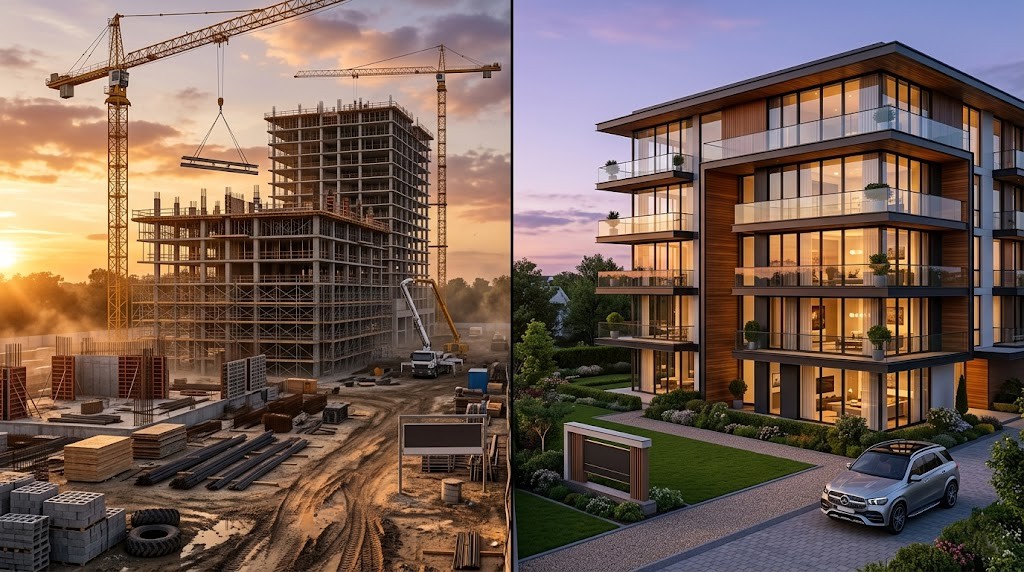
Pre-construction buying in Niagara offers lower entry prices, extended deposit structures and the ability to purchase at today’s prices for a home completed in 2027–2028. The trade-offs are real: construction delays, inability to inspect the actual unit before purchase, developer-set pricing with less negotiating room, and the risk of market changes during the construction period.
For buyers with flexibility on timing, strong financial positions and a long-term horizon, pre-construction in Niagara’s growth corridors — particularly Thorold, Pelham and south Niagara Falls — represents genuine value. For buyers who need to move by a specific date or who want to see exactly what they are purchasing, resale remains the stronger choice.
Explore current pre-construction projects in the Niagara Region at PreconstrcutionProjectsInNiagara.com for an up-to-date list of active communities and VIP access opportunities.
Frequently Asked Questions — Buying a Home in Niagara 2026
Average resale home prices in the Niagara Region in 2026 range from approximately $440,000–$480,000 in the most affordable communities (Port Colborne, Welland, Fort Erie) to $680,000–$950,000 in premium communities like Pelham and Fonthill. Niagara Falls and St. Catharines — the two most active markets — average $540,000–$780,000 depending on property type and neighbourhood. These figures represent meaningful affordability relative to the GTA where comparable properties trade 40–60% higher.
The minimum down payment in Canada is 5% for homes priced under $500,000. For homes between $500,000 and $999,999, the minimum is 5% on the first $500,000 and 10% on the remaining amount. For homes priced at $1,000,000 or more, the minimum down payment is 20%. A down payment under 20% requires CMHC mortgage insurance, which adds 2.8%–4.0% of the mortgage amount to your loan balance.
Yes — first-time buyers in Ontario receive a Land Transfer Tax rebate of up to $4,000. This rebate fully offsets the Ontario LTT on homes priced at or below approximately $368,000. For homes above this threshold, the rebate is partial. To qualify, you must be a Canadian citizen or permanent resident, be at least 18 years old, never have owned a home anywhere in the world, and occupy the home as your principal residence within 9 months of closing.
Yes — first-time buyers in Ontario receive a Land Transfer Tax rebate of up to $4,000. This rebate fully offsets the Ontario LTT on homes priced at or below approximately $368,000. For homes above this threshold, the rebate is partial. To qualify, you must be a Canadian citizen or permanent resident, be at least 18 years old, never have owned a home anywhere in the world, and occupy the home as your principal residence within 9 months of closing.
The Niagara home buying process typically takes 60–120 days from initial pre-approval through to key collection. This includes 2–4 weeks for mortgage pre-approval, 2–8 weeks of active property search and offer making (varies significantly by market conditions and buyer decisiveness), and 30–90 days for the closing period after an accepted offer. Working with an experienced local realtor significantly compresses the search phase by targeting the right properties from day one.
Yes — we strongly recommend a home inspection on all resale purchases in Niagara. The region has a significant stock of older homes (1950s–1980s construction) where deferred maintenance, aging HVAC systems, knob-and-tube wiring, galvanized plumbing and foundation issues are common. A professional home inspection typically costs $400–$600 and can identify issues worth tens of thousands of dollars in potential repairs. Include a home inspection condition in your offer whenever market conditions allow.
Niagara offers strong fundamentals for investment property buyers in 2026 — particularly in St. Catharines, Thorold and Niagara Falls where student and working professional rental demand is consistent. Gross rental yields of 4%–6.5% are achievable in well-selected properties, compared to sub-3% yields in many GTA neighbourhoods. The region’s growing population, healthcare and education sectors, and tourism economy support long-term rental demand. For investment-specific analysis, explore RealEstateInvestmentsInNiagara.com.
The Canadian mortgage stress test requires all buyers — regardless of down payment size — to qualify at the higher of their contracted mortgage rate plus 2% or 5.25%. This means if your lender offers you a rate of 4.5%, you must qualify as if your rate is 6.5%. The stress test was introduced to ensure buyers can continue making payments if rates rise after purchase. For Niagara buyers, this typically reduces maximum purchase price by 15%–20% compared to qualifying at the actual contract rate.
St. Catharines’ most sought-after buyer neighbourhoods in 2026 include Grantham (family-oriented, good schools, transit access), Port Dalhousie (waterfront character, premium pricing, lifestyle appeal), downtown core (revitalization investment, walkability, younger buyer demographics) and the Merritt Street corridor near Brock University (investor-friendly, strong rental demand from students and faculty). Your realtor will advise on specific street-level value relative to your budget and intended use.
Yes — permanent residents and certain work permit holders can buy property in Canada, including in the Niagara Region. Recent changes to the Prohibition on the Purchase of Residential Property by Non-Canadians Act have clarified that permanent residents are fully exempt from the foreign buyer restrictions. Newcomers should work with a mortgage broker experienced with new-to-Canada financing programs — several major banks and credit unions offer products that accommodate limited Canadian credit history with alternative documentation.
Timing the market is notoriously unreliable — for buyers who are financially ready, in a stable life situation and planning to hold for 5 or more years, the Niagara market in 2026 presents favourable conditions: improved affordability versus the 2022 peak, active inventory levels giving buyers more choice, and continued population growth supporting long-term value. Buyers who wait for a “perfect” entry point often find that by the time it arrives, competition has already pushed prices up. Consult with a Quantum Team Realty advisor to assess your specific situation objectively.
Your Niagara Home is Within Reach — Start With the Right Team
The Niagara Region in 2026 offers something that the GTA cannot: a realistic path to homeownership for buyers at a wide range of income levels, combined with a quality of life that continues to attract buyers from across Ontario and beyond. The buying process is straightforward when you have the right financial preparation, local market knowledge and professional support.
▶ Book a free buyer consultation — Quantum Team Realty, Niagara Region
▶ Read the Niagara Real Estate Market Forecast 2026 — full analysis on Arzman.ca
▶ Explore Niagara Falls neighbourhoods and current listings
▶ Not ready to buy yet? Explore Niagara rental options first
▶ Selling your current home? Read the complete Niagara Sellers Guide 2026

Arzman Singh
Arzman is a Niagara-based realtor with over 6 years of experience, working with Quantum Team Realty Team. He specializes in helping clients find rental or lease properties, offering expert guidance in the Niagara real estate market.